
Recommended
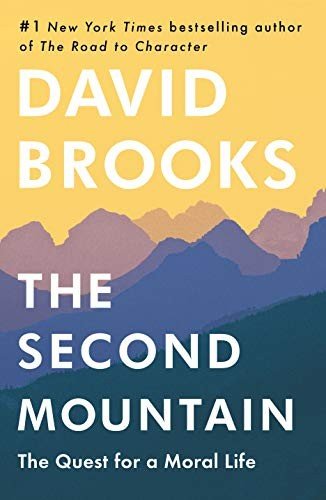
The Second Mountain
The Quest for a Moral Life
After the first mountain of achievement comes a second: a life of commitment to others.
- Published 2019
- Moderate
- Philosophy and ideas
- 2 min analysis
As an Amazon Associate I earn from qualifying purchases.
Introduction
David Brooks, a long-time New York Times columnist, argues that many people climb a 'first mountain' of career, status and personal success, only to find it unsatisfying. The Second Mountain, published in 2019, describes a second climb toward commitment, community and service.
Brooks draws on his own life, including a divorce and loneliness, and stories of people who found meaning.
Who should read this book?
People in mid-life questioning success, readers seeking meaning, and anyone interested in community and commitment.
Helps with: Find purpose and direction
The central message
A deep life comes from commitments to others: vocation, family, philosophy or faith, and community.
Key ideas and concepts
The first mountain
The climb most people start on: building a career, reputation and personal happiness.
The valley
Failure, loss or suffering often knocks people off the first mountain and into a period of searching.
The second mountain
A life of commitment to others, where joy comes from giving yourself away.
The four commitments
Brooks identifies four: to a vocation, to a spouse and family, to a philosophy or faith, and to a community.
Relationalism
He argues for a culture that puts relationships, not individual achievement, at the centre.
Deeper analysis
The Second Mountain is thoughtful, well written and a meaningful counterpoint to individualistic self-help. Brooks draws on his own experience of divorce and loneliness, and on stories of people who found purpose in service and community. The four commitments offer a useful lens for assessing where meaning comes from in your own life.
The section on Brooks's personal religious journey won't resonate with all readers, and some find the book long and occasionally preachy. Its critique of hyper-individualism is broad and sometimes sweeping. Still, it's a rich reflection on what makes life deep.
Practical applications
- Reflect on which mountain you're on.
- Identify your four commitments.
- Serve your community.
- Deepen a relationship.
- Reflect on a valley experience.
Your 7-day action plan
- Day 1
Reflect on what your 'first mountain' has been.
- Day 2
Identify a valley experience that changed you.
- Day 3
Write your four commitments: vocation, family, philosophy and community.
- Day 4
Serve someone without expecting anything back.
- Day 5
Deepen one relationship with an honest conversation.
- Day 6
Reflect on your vocation and whether it feels like a calling.
- Day 7
Write one step toward your second mountain.
Outcomes to expect
What readers who apply this book can realistically take away from it:
- Clarity about your deepest commitments
- A shift from self-focus to service
- Stronger connection to community
- A richer sense of meaning
Strengths and limitations
Strengths
- Thoughtful, well-written reflection
- Useful framework of four commitments
- Counterpoint to individualistic self-help
- Honest about the author's own struggles
Limitations
- Religious journey won't resonate with everyone
- Long and occasionally preachy
- Sweeping cultural critique
Reflection questions
- Which mountain are you on?
- What are your commitments?
- What valley shaped you?
- How could you serve others?
Related books
Meditations
Marcus Aurelius
The private journal of a Roman emperor on staying steady when life is hard.
The Four Agreements
Don Miguel Ruiz
Four simple promises to yourself that can free you from a lot of unhappiness.


Part of the reading path: Find Greater Purpose
About the author
Explore the book
Read reviews, see formats (print, Kindle, audiobook) and check the current price.
See it on AmazonAs an Amazon Associate I earn from qualifying purchases.
Book details (title, author, year) are factual. Everything under the headings above is MindsetProdigy's own editorial analysis and interpretation, written to help you decide whether to read the book and how to apply it. It is not a substitute for reading the book itself. Last updated September 29, 2026.