
Highly recommended
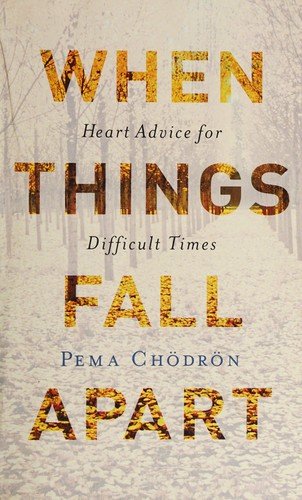
When Things Fall Apart
Heart Advice for Difficult Times
Buddhist wisdom for difficult times: lean into discomfort instead of running from it.
- Published 1997
- Moderate
- Philosophy and ideas
- 2 min analysis
As an Amazon Associate I earn from qualifying purchases.
Introduction
Pema Chödrön is an American Tibetan Buddhist nun associated with Gampo Abbey in Nova Scotia, Canada. When Things Fall Apart, published in 1997, offers teachings on handling pain, fear and uncertainty.
She encourages readers to lean into difficulty rather than run from it.
Who should read this book?
Anyone going through loss, crisis or uncertainty, and readers interested in Buddhist approaches to suffering.
Helps with: Bounce back from setbacks, Heal and grow
The central message
When life falls apart, we can stay with the discomfort, open our hearts and grow, rather than seeking escape.
Key ideas and concepts
Leaning into discomfort
Instead of running from pain, fear or uncertainty, Chödrön encourages staying with it and getting curious.
Groundlessness
Life is fundamentally uncertain. Accepting that there's no solid ground can bring freedom.
Maitri
Unconditional friendliness toward yourself, including your flaws and fears.
Tonglen
A meditation in which you breathe in others' pain and breathe out relief and kindness.
No escape
Difficulties are not obstacles to the spiritual path; they are the path.
Deeper analysis
When Things Fall Apart is gentle, wise and deeply comforting for people in crisis. Chödrön's honesty about her own difficulties, including the end of her marriage, makes her teachings feel lived rather than abstract. Practices like tonglen and maitri offer compassionate ways to stay present with pain.
The Buddhist framework and terminology won't suit everyone, and some chapters feel abstract or repetitive. Leaning into pain is wise counsel but may need professional support in cases of trauma or depression. Still, it's a beloved source of solace.
Practical applications
- Stay with a difficult feeling for a few minutes.
- Practise friendliness toward yourself.
- Try tonglen meditation.
- Accept uncertainty in one situation.
- Read a chapter during hard times.
Your 7-day action plan
- Day 1
Notice how you avoid discomfort when it arises.
- Day 2
Stay with a difficult feeling for three minutes without fixing it.
- Day 3
Practise maitri by offering yourself unconditional friendliness.
- Day 4
Try tonglen: breathe in someone's pain, breathe out relief.
- Day 5
Accept the uncertainty of one situation you can't control.
- Day 6
Read one chapter slowly and note a line that speaks to you.
- Day 7
Reflect on what leaning in, rather than running, felt like.
Outcomes to expect
What readers who apply this book can realistically take away from it:
- Comfort and perspective in hard times
- Greater self-compassion
- Ability to stay present with uncertainty
- Compassion for others' suffering
Strengths and limitations
Strengths
- Gentle, wise and comforting
- Compassionate practices like tonglen and maitri
- Honest about the author's own struggles
- Speaks directly to people in crisis
Limitations
- Buddhist terminology won't suit everyone
- Abstract and repetitive in places
- Not a substitute for professional support
Reflection questions
- What are you avoiding?
- How do you treat yourself in pain?
- How do you handle uncertainty?
- Who could you send compassion to?
Related books
Meditations
Marcus Aurelius
The private journal of a Roman emperor on staying steady when life is hard.
The Four Agreements
Don Miguel Ruiz
Four simple promises to yourself that can free you from a lot of unhappiness.



About the author
Explore the book
Read reviews, see formats (print, Kindle, audiobook) and check the current price.
See it on AmazonAs an Amazon Associate I earn from qualifying purchases.
Book details (title, author, year) are factual. Everything under the headings above is MindsetProdigy's own editorial analysis and interpretation, written to help you decide whether to read the book and how to apply it. It is not a substitute for reading the book itself. Last updated September 29, 2026.