
Highly recommended
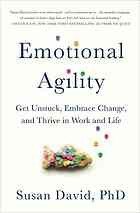
Emotional Agility
Get Unstuck, Embrace Change, and Thrive in Work and Life
Don't fight difficult emotions or get hooked by them. Approach them with curiosity and act on your values.
- Published 2016
- Moderate
- Science and research
- 2 min analysis
As an Amazon Associate I earn from qualifying purchases.
Introduction
Susan David is a psychologist on the faculty of Harvard Medical School. Emotional Agility, published in 2016, grew out of an article she wrote for Harvard Business Review. She argues that rigid responses to difficult thoughts and feelings, either bottling them up or brooding on them, keep us stuck.
Instead, she proposes approaching our inner experiences with curiosity and acting on our values.
Who should read this book?
People who feel stuck in difficult emotions, perfectionists, professionals under stress and anyone wanting a healthier relationship with feelings.
Helps with: Bounce back from setbacks, Calm stress and anxiety
The central message
Emotional agility means facing difficult emotions with curiosity and compassion, stepping back from them, and acting in line with your values.
Key ideas and concepts
Getting hooked
We get 'hooked' by thoughts, emotions and stories that drive behaviour that doesn't serve us.
Showing up
Face difficult emotions with curiosity and kindness rather than bottling them up or brooding.
Stepping out
Create distance from thoughts, for example by noticing 'I'm having the thought that…'
Walking your why
Clarify your core values and use them as a compass for decisions.
Moving on
Make small, values-based changes, which David calls tiny tweaks, to habits and routines.
Deeper analysis
Emotional Agility is practical, warm and grounded in psychology, drawing on ideas similar to Acceptance and Commitment Therapy. David's rejection of forced positivity is refreshing: she argues that 'difficult emotions are part of our contract with life' and that trying to suppress them backfires. Her four movements, showing up, stepping out, walking your why and moving on, give readers a clear path.
Some concepts overlap with other books on emotions and ACT, and the business examples may not resonate with everyone. The book is more reflective than step-by-step. Still, it's a helpful guide to handling emotions wisely.
Practical applications
- Notice when you're hooked by a thought.
- Name emotions with curiosity.
- Label thoughts as thoughts: 'I'm having the thought that…'
- Identify your core values.
- Make one tiny, values-based tweak to a habit.
Your 7-day action plan
- Day 1
Notice when you get hooked.
- Day 2
Show up to a difficult emotion with curiosity.
- Day 3
Practise stepping out by labelling thoughts.
- Day 4
Write your core values.
- Day 5
Make one decision based on values.
- Day 6
Make a tiny tweak to a routine.
- Day 7
Reflect on how you handled emotions.
Outcomes to expect
What readers who apply this book can realistically take away from it:
- Healthier relationship with emotions
- Less rumination and suppression
- Values-based decisions
- Small, lasting habit changes
Strengths and limitations
Strengths
- Practical and grounded in psychology
- Rejects forced positivity
- Warm, accessible writing
- Useful tools for stepping back from thoughts
Limitations
- Overlaps with other books on ACT and emotions
- Business examples may not resonate with all
- More reflective than step-by-step
Reflection questions
- What thoughts hook you most often?
- How do you usually respond to difficult emotions?
- What are your core values?
- What tiny tweak could you make this week?
Related books
The Power of Now
Eckhart Tolle
Most of your suffering lives in the past and future. Peace is only ever here, now.
Attached
Amir Levine and Rachel S. F. Heller
Understand your attachment style, and your relationships start to make sense.


About the author
Explore the book
Read reviews, see formats (print, Kindle, audiobook) and check the current price.
See it on AmazonAs an Amazon Associate I earn from qualifying purchases.
Book details (title, author, year) are factual. Everything under the headings above is MindsetProdigy's own editorial analysis and interpretation, written to help you decide whether to read the book and how to apply it. It is not a substitute for reading the book itself. Last updated September 28, 2026.