
Highly recommended
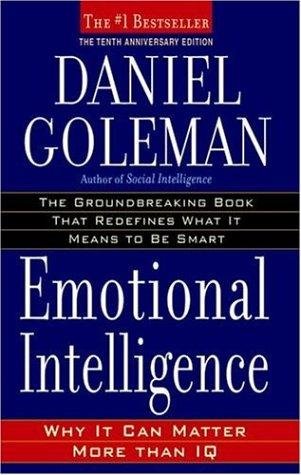
Emotional Intelligence
Why It Can Matter More Than IQ
Understanding emotions, yours and others', is a skill that shapes your life. The book that popularized emotional intelligence.
- Published 1995
- Moderate
- Science and research
- 2 min analysis
As an Amazon Associate I earn from qualifying purchases.
Introduction
Daniel Goleman is a psychologist who wrote about brain and behaviour science for The New York Times. Emotional Intelligence, published in 1995, built on research by psychologists Peter Salovey and John Mayer and brought the concept to a mass audience.
Goleman argued that skills like self-awareness, self-control, empathy and social skill can matter as much as IQ for success and wellbeing, and that they can be learned.
Who should read this book?
Readers who want to understand and manage emotions more skilfully, including managers, parents, teachers and anyone curious about the psychology of feelings.
Helps with: Communicate and persuade, Improve my relationships, Lead and grow at work
The central message
Emotional intelligence, knowing and managing your emotions, recognizing others' emotions and handling relationships, is crucial for life success and can be developed.
Key ideas and concepts
Emotional hijacking
Goleman describes how a strong emotional reaction can overwhelm rational thought, what he called an 'amygdala hijack', leading us to act in ways we regret.
Self-awareness
Recognizing feelings as they happen is the foundation of emotional intelligence.
Managing emotions
Handling anger, anxiety and sadness constructively, rather than suppressing them or being ruled by them.
Empathy
Reading others' emotions, often through nonverbal cues, is essential to relationships.
Social skills and schools
Goleman championed teaching emotional skills in schools, which inspired social and emotional learning programmes.
Deeper analysis
Emotional Intelligence was enormously influential, popularizing a concept that changed how schools, workplaces and families think about feelings. Its explanations of emotional hijacking and the value of self-awareness and empathy remain useful.
Some claims, such as the idea that emotional intelligence matters more than IQ, have been criticized as overstated, and researchers debate how to define and measure it. Some of the brain science has also been simplified or updated since 1995. The book is long and more explanatory than practical. Still, it's an important foundation.
Practical applications
- Name your emotions as they arise during the day.
- When you feel a surge of anger, pause and breathe before reacting.
- Practise empathic listening by reflecting back what someone feels.
- Reflect on situations that trigger strong emotions.
- Express appreciation to someone each day.
Your 7-day action plan
- Day 1
Keep a log of emotions you feel and when.
- Day 2
Notice what triggers your strongest reactions.
- Day 3
Practise pausing for six seconds before reacting.
- Day 4
Listen to someone and name the emotion you hear.
- Day 5
Reflect on a recent conflict and the emotions involved.
- Day 6
Express appreciation to three people.
- Day 7
Review your log and pick one skill to develop.
Outcomes to expect
What readers who apply this book can realistically take away from it:
- Greater emotional self-awareness
- Better control of strong reactions
- Improved empathy and listening
- Stronger relationships
Strengths and limitations
Strengths
- Hugely influential in schools and workplaces
- Clear explanation of emotional hijacking
- Shows emotional skills can be learned
- Accessible introduction to the psychology of emotions
Limitations
- Some claims about EI vs IQ overstated
- Definition and measurement still debated
- More explanation than practical exercises
Reflection questions
- Which emotion do you find hardest to handle?
- When have you been emotionally hijacked?
- How well do you read others' feelings?
- Which emotional skill would most improve your life?
Related books
The Power of Now
Eckhart Tolle
Most of your suffering lives in the past and future. Peace is only ever here, now.
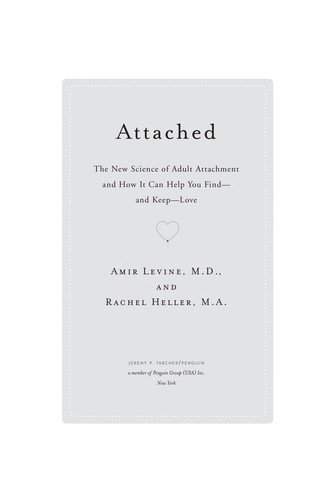
Attached
Amir Levine and Rachel S. F. Heller
Understand your attachment style, and your relationships start to make sense.


About the author
Explore the book
Read reviews, see formats (print, Kindle, audiobook) and check the current price.
See it on AmazonAs an Amazon Associate I earn from qualifying purchases.
Book details (title, author, year) are factual. Everything under the headings above is MindsetProdigy's own editorial analysis and interpretation, written to help you decide whether to read the book and how to apply it. It is not a substitute for reading the book itself. Last updated September 28, 2026.