
Essential read
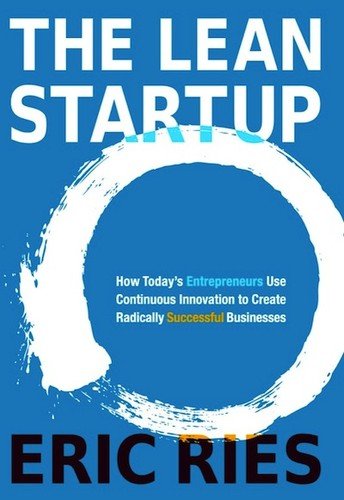
The Lean Startup
How Today's Entrepreneurs Use Continuous Innovation to Create Radically Successful Businesses
Build, measure, learn. Test ideas quickly and cheaply before betting everything on them.
- Published 2011
- Moderate
- Practical guidance
- 2 min analysis
As an Amazon Associate I earn from qualifying purchases.
Introduction
Eric Ries experienced startup failure first-hand before helping build IMVU, a company where he developed many of the ideas in this book. The Lean Startup, published in 2011, applies principles from lean manufacturing and scientific experimentation to building new businesses under conditions of extreme uncertainty.
Its vocabulary, including the minimum viable product (MVP), pivot and build-measure-learn, has become standard language among founders worldwide.
Who should read this book?
Founders, product managers, innovators inside larger companies and anyone launching something new without knowing whether customers will want it.
Helps with: Start something of my own, Think and decide more clearly
The central message
Startups should treat their plans as hypotheses and test them quickly with real customers, learning what works before investing heavily.
Key ideas and concepts
Build-measure-learn
The core loop: build a minimal version of an idea, measure how customers respond, and learn whether to continue, adjust or abandon it.
Minimum viable product
The smallest version of a product that lets you start learning from real customers. It's about learning, not launching a polished product.
Validated learning
Progress is measured by what you've learned about customers through experiments, not by how busy you are or how much you've built.
Pivot or persevere
Regularly decide, based on evidence, whether to keep going or change a fundamental part of the strategy.
Innovation accounting
Use actionable metrics, rather than vanity metrics like total sign-ups, to judge whether the business is truly improving.
Deeper analysis
The Lean Startup changed how many entrepreneurs think about risk. Its central message, test assumptions cheaply before betting everything, has saved countless founders from building products nobody wanted, and its concepts apply well beyond tech startups, including to non-profits and teams within large companies.
The book is repetitive in places and leans heavily on software examples, where building and testing are cheap; in fields like hardware, healthcare or physical products, rapid experimentation is harder. 'MVP' is also often misunderstood as permission to release a poor product. Some critics note that lean thinking can encourage incremental tweaks rather than bold vision. Even so, it remains essential reading for anyone starting something new.
Practical applications
- Write down the riskiest assumption behind your idea.
- Design the cheapest possible test of that assumption.
- Talk to five potential customers before building anything.
- Choose one actionable metric to track instead of vanity metrics.
- Schedule a regular pivot-or-persevere review.
Your 7-day action plan
- Day 1
List the key assumptions behind your idea.
- Day 2
Identify the riskiest one.
- Day 3
Design a small experiment to test it.
- Day 4
Talk to potential customers.
- Day 5
Build or mock up a minimum viable product.
- Day 6
Measure the response with a clear metric.
- Day 7
Decide whether to pivot or persevere.
Outcomes to expect
What readers who apply this book can realistically take away from it:
- A practical method for testing business ideas
- Less wasted time and money
- Better use of customer feedback
- Clear criteria for changing direction
Strengths and limitations
Strengths
- Influential, practical framework
- Reduces risk for new ventures
- Applies beyond tech startups
- Clear vocabulary for teams
Limitations
- Software-heavy examples
- Repetitive in places
- MVP idea is often misunderstood
Reflection questions
- What assumption, if wrong, would sink your idea?
- How could you test it this week for little money?
- Which of your metrics are vanity metrics?
- What evidence would make you change direction?
Related books
The E-Myth Revisited
Michael E. Gerber
Work on your business, not just in it. Why small businesses struggle, and how systems set you free.
The Innovator's Dilemma
Clayton M. Christensen
Why well-run companies fail when new technologies arrive, and the theory of disruptive innovation.


About the author
Explore the book
Read reviews, see formats (print, Kindle, audiobook) and check the current price.
See it on AmazonAs an Amazon Associate I earn from qualifying purchases.
Book details (title, author, year) are factual. Everything under the headings above is MindsetProdigy's own editorial analysis and interpretation, written to help you decide whether to read the book and how to apply it. It is not a substitute for reading the book itself. Last updated September 27, 2026.